
Teaching About Resilient Faith In Action

Building a Three-Legged Stool
I have taught my fair share of what I would consider to be awful youth group lessons. Particularly, I can remember lessons I've taught where the passage we were looking at that night was theologically dense. I felt so much pressure to unpack the theology of the text in a way that was clear, faithful, and accurate. In that regard, I probably did a decent job!
But I realized, partly from the glazed-over eyes of my students and partly from feedback from leaders after small group, that while my students understood the theology better, none of them cared. Worse, none of them could see how the theology I meticulously unpacked had any relevance or meaning to their life. Repeated moments like this eventually forced me to rethink my approach to teaching students, and ultimately develop what I believe is a solid framework for teaching.
Think of teaching a solid lesson for your youth as a three-legged stool: Remove any one of the legs, and the whole thing topples over. The same thing applies with three core elements that should be present in our teaching style and lessons: (1) teach Scripture faithfully, (2) connect the truth to life, and (3) invite students to a personal encounter with Jesus. These elements in our teaching can convey practical themes presented as “steps” for students to consider.
1. Teach Scripture Faithfully
As shepherds of our students, God has called us to feed his sheep. Practically, this means we need to start with the Word of God. Everything we do starts with the Bible. Teaching times are not TED Talks, feel-good messages, or breezy, quick devotionals. Lasting faith must be rooted in the Word of God. We want students to do more than just read a verse and move on; we want students to stay in Scripture and to see its richness, its challenge to us, and its beauty.
We teach our students Scripture because it is God’s Word that testifies to Christ Jesus and because it is God’s authoritative message to us. Paul teaches us that all Scripture is God-breathed (2 Timothy 3:16). This means that every page is teeming with potential for life transformation.
Our lessons can and should begin with Scripture. Read the text aloud deliberately and with enthusiasm. Remember, God’s Word is alive and active, and your voice should be too. Consider having a student read the text out loud as well. Then explain the text. Spend time studying and reflecting on the text.
Pose questions like the following:
• What does this text say about who God is?
• What does the text say about who we are?
• What has Jesus done?
• What is our hope?
“We teach our students Scripture because it is God’s Word that testifies to Christ Jesus and because it is God’s authoritative message to us. Paul teaches us that all Scripture is God-breathed (2 Timothy 3:16). This means that every page is teeming with potential for life transformation.”
Thinking through questions like this and explaining them with the Scriptures will allow the Word to speak clearly into the hearts and minds of your students. This also gives your lesson real authority as the message is carried by the authority of Christ, not your own cleverness.
Once you’ve taught the biblical text clearly, it would be helpful for you to try to anticipate any obstacles the text might bring. Scripture can be difficult, confusing, and even outright troubling at times. For example, if you’re teaching the story of Noah’s ark, your students might have questions about the morality of God flooding the world. This is where apologetics and preaching can be helpful. Think through some of their possible objections with questions like these:
• How does this passage directly counter messages from culture?
• What doubts might a student carry into the room tonight, and how does this passage speak to them?
• Which students are most likely to struggle with this text?
As you teach the text, you can name these struggles out loud in the room and address them head-on. Your students will see that God is big enough to handle our questions and that thoughtful Christians have good answers to these types of questions or doubts. In addition, when doubts create a wall between the student and the Word of God, helping to tear down those walls puts the student in a better position to see how the text of Scripture speaks to their life.
2. Connect the Truth To Life
If we don’t show our students how the Bible connects to their lives, they’ll likely miss it. If a student doesn’t see how a passage of Scripture is relevant, they’ll quietly disengage from Scripture. Part of our job as youth workers is to help them bridge the divide between good, solid biblical truth and their lived experience. This doesn’t mean we dumb down the Bible or try to make it hip and trendy. It means we show our students that their questions, struggles, and hopes are addressed by God’s Word, and nothing surprises him. This might come through asking vulnerable questions, sharing personal stories, or naming the silent doubts in the room. When students feel seen and heard, they begin to open up. And when truth meets a receptive heart, transformation begins.
One of the most effective ways we can connect truth to life is through asking our students questions aimed at their hearts. These aren’t the same as comprehension questions but are instead aimed at the core of students. Heart-level questions act as an invitation to our students to see how the Bible connects to their lived experience. These include questions like:
• Where do you see yourself in this story?
• What’s hard to believe about the truth of this Scripture right now?
• How does this passage speak to your life right now?
Give your students a chance to think through their answers and process them in some way. You could give them time to journal, discuss with a neighbor, or work through it with their small group. Creating opportunities like this gives your students a pathway to move from facts to personal application.
Part of connecting the truth of Scripture to your students’ lives is naming beliefs and goals that compete with what you’ve taught. All people, your students included, are building their lives on something. It could be the approval of their friends, their grades, their relationships, or a host of other things. Many of the things that compete to be the foundation of our lives aren’t necessarily evil, but none of them can bear the weight of a life. When storms hit—and they will—what’s left? When the relationship ends or the grades drop, what does your student have to lean on?
Culture also teaches beliefs and values that often compete with what we want our students to believe. They are bombarded with messages like: Truth is relative, happiness is the ultimate goal, and morals are socially constructed. We want to show our students that Scripture offers a better way to think. Asking questions compassionately can help students see how flimsy the base they may be building their lives on is. This helps motivate students to build their lives on Christ, the only firm foundation.
3. Invite Students To a Personal Encounter With Jesus
The end goal of our teaching time is not simply information transfer but an authentic spiritual encounter. We want students to walk away having not just learned about Jesus but met with him. This happens when we create space for reflection, prayer, listening, and silence. It can be as simple as a quiet moment at the end of a talk, or as intentional as a journaling exercise or Scripture meditation. Resilient faith grows when students move beyond talking about God to actually talking to him.
If we’ve asked heart-level questions but then stop short of helping our students respond to what God is saying, we’ve missed a critical opportunity. If we take the time to go a step further and make space for our students to encounter God, we help them hear the Lord and respond to him in obedience. If we can do this consistently, week after week, this will be a part of their building a history with God, an indisputable personal record of the Word of God shaping their lives and hearts in real ways.
This practice doesn’t need to be elaborate—it can be as simple as a small, quiet moment at the end of a talk where you ask students to pray in silence, God what are you saying to me through this text? Some tips for creating this atmosphere of space follow:
• Give your students some time to reflect. Let the silence and the Holy Spirit work.
• Consider allowing a few students to share what surfaced in their time of reflection.
• Lead the group in a prayer together.
Finally, close with something concrete. Resilient faith is lived faith. End with an action step, something personal your students can do next to help them live out what you’ve taught them from Scripture. It could be helpful to have students share their next step with a leader or a friend. When students share ideas for walking out their faith, they’re more likely to follow through.
Remember, there is no perfect youth group lesson. You won't nail it every week. You'll misfire here and there. But if we can teach our students who God is, what his plan for humanity is, and why it matters deeply for their lives, I believe our teaching can be more effective. Start with small changes to your approach, continue to be faithful, and trust the Lord to soften the hearts of your students.
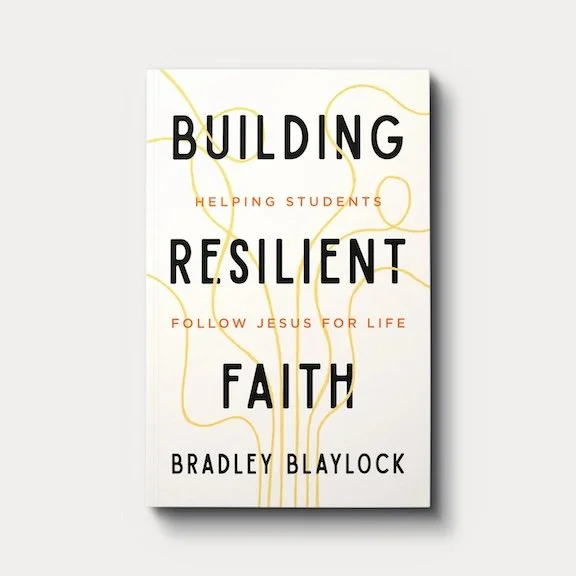
Bradley Blaylock, MA, MATS, PhD, is a Professor of Theological Studies at Highlands College in Birmingham, AL and has previously served in youth ministry and adult education ministry. He is committed to forming students who navigate moral complexity with biblical clarity, theological depth, and Christlike character. He is the author of Building Resilient Faith.